
Maintaining a consistent, healthy, and energy-efficient indoor climate represents one of the most fundamental aspects of modern residential stewardship. Within any contemporary home, mechanical air handling and temperature control systems function as the hidden pulse of daily living, quietly dictating whether interior spaces feel restorative or inhospitable. When ambient outdoor weather oscillates between the humid, baking heat of midsummer and the sub-zero wind chills of deep winter, an optimized indoor environment provides essential refuge. Beyond personal comfort, indoor climate stability protects building envelopes from destructive moisture accumulation, prevents hardwood floors from cupping or checking, preserves sensitive interior millwork, and controls volatile organic compounds and airborne allergens before they can compromise family health.
However, sustaining optimal indoor comfort requires moving beyond a reactive mindset that only addresses climate hardware when catastrophic failures occur. Residential cooling and heating machinery contains some of the most complex mechanical, thermodynamic, and electrical components found in any building. High-pressure chemical refrigerants,variable-speed brushless motors, microchannel heat exchangers, gas combustion valves, and sensitive electronic circuit boards operate under relentless cyclical physical stress. When basic seasonal filter changes are neglected, or when minor refrigerant imbalances are ignored, the efficiency of the entire machinery deteriorates rapidly. What begins as a subtle, unnoticed drop in seasonal energy efficiency soon escalates into sky-high utility bills, frozen evaporator coils, cracked heat exchangers, and premature compressor burnout that can cost thousands of dollars to rectify.
Achieving superior indoor comfort while simultaneously lowering monthly operational overhead demands a proactive,trade-coordinated strategy. Success requires balancing mechanical capacity with architectural building physics, ensuring that ductwork sizing, room volume, insulation density, and window solar heat gain coefficients work in structural harmony. Homeowners who align themselves with certified trade professionals across diagnostic cooling restoration, precision ductless zoning, combustion safety, and whole-home thermostat integration protect their residential equity from preventable mechanical decay. Taking a disciplined, detail-oriented approach to seasonal climate upkeep converts an energy-hungry household into a high-performance sanctuary that delivers quiet, dependable, and cost-effective comfort across every month of the year.

Partnering with Certified Climate Specialists for Full-System Evaluations
Modern residential air management networks are integrated thermodynamic systems that require precise engineering calculations rather than educated guesswork. Attempting to manage aging mechanical equipment through piecemeal DIY adjustments or unverified handymen often masks underlying system imbalances, leading to incorrect airflow pressures,short-cycling equipment, and voided manufacturer component warranties.
Contracting reputable heating and air conditioning companies ensures that your property receives thorough, certified mechanical assessments based on industry-standard engineering protocols such as ACCA Manual J and Manual D calculations. Licensed mechanical contractors utilize digital manifold gauges, anemometers, and combustion analyzers to evaluate the real-world operational health of your climate equipment. They inspect electrical contactors for pitting, evaluate motor capacitors for microfarad drift, clear algae-prone condensate drain traps, and verify that the duct system delivers balanced static pressure to every quadrant of the home.
The presence of an accredited, licensed contractor guarantees that any mechanical modifications or system retrofits adhere strictly to municipal building safety codes and national environmental protection standards. Professional technicians identify subtle early signs of operational decay, such as leaking evaporator coils or worn blower motor bearings, before these minor issues trigger catastrophic compressor lockups during the hottest week of the summer. Securing professional trade partnerships establishes a reliable, code-compliant foundation for your home’s mechanical infrastructure.
Resolving Compressor and Airflow Faults to Restore Consistent Cooling
When an air conditioning system struggles to maintain the set temperature during extreme heat, the issue often stems from subtle airflow restrictions or refrigerant circuit degradation. Neglected outdoor condenser coils become choked with lawn debris, cottonwood fluff, and airborne dust, preventing efficient thermal transfer and forcing the compressor to operate under dangerously high head pressures.
Scheduling targeted HVAC repairs at the first sign of lukewarm airflow or unusual mechanical vibration allows certified technicians to diagnose and correct refrigeration problems before terminal compressor failure occurs. Technicians use electronic halogen sniffers and ultrasonic leak detectors to locate minute pinhole leaks in copper tubing or aluminum microchannels, brazing damaged lines and restoring exact factory refrigerant charge weights. They also clean blower wheel assemblies, lubricate motor shafts, and adjust variable-speed fan curves to ensure adequate air volume moves across the cooling coil without freezing condensed moisture on the fins.
Timely mechanical intervention prevents minor component issues, such as a failing thirty-dollar run capacitor, from destroying a multi-thousand-dollar compressor. Restoring smooth airflow and unobstructed thermal exchange lowers electrical current draw, eliminating the circuit-tripping events and noisy exterior vibration common to struggling machinery. Precision mechanical repair work restores crisp, quiet cooling performance while protecting the equipment from severe internal thermal stress.
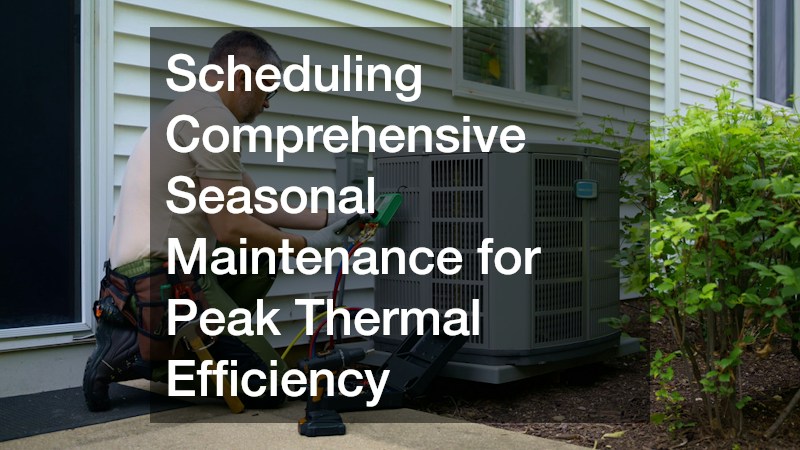
Scheduling Comprehensive Seasonal Maintenance for Peak Thermal Efficiency
Residential climate systems experience substantial periods of idle downtime followed by sudden, prolonged stretches of continuous maximum-output operation. When machinery shifts directly from months of spring dormancy into heavy summer cooling cycles without preventative servicing, accumulated debris, dried lubrication, and loose electrical terminations create immediate performance liabilities.
Enrolling in comprehensive HVAC services prior to the onset of summer and winter seasons guarantees that every mechanical sub-assembly is cleaned, calibrated, and safety-tested. Certified service specialists chemically foam outdoor condenser coils to dislodge deeply embedded road grime, clean indoor evaporator fins with non-rinsing alkaline solutions,and test safety limit switches that shut systems down in the event of dangerous overheating. They also measure temperature splits across supply and return plenums, verifying that the air conditioning circuit achieves the standard sixteen-to-twenty-degree cooling differential required for proper dehumidification.
Evaluating Reputable Regional Contractors for System Replacements
Eventually, all residential climate machinery reaches the end of its viable economic life cycle. When a compressor fails on a twenty-year-old system running obsolete hydrochlorofluorocarbon refrigerants, investing thousands of dollars in emergency repairs yields diminishing returns compared to the dramatic efficiency gains offered by modern variable-capacity inverter equipment.
Evaluating established HVAC companies enables homeowners to review verified trade licensing, technician certifications through organizations like NATE, commercial liability coverage, and customer satisfaction histories across regional mechanical enterprises. Top-tier regional providers maintain access to Tier-One equipment manufacturers, offering multi-stage heat pumps and high-efficiency gas furnaces backed by comprehensive ten-year parts and labor warranties.
Working with an accredited, established regional firm eliminates the risk of improper equipment sizing, poor sheet metal fabrication, or abandoned warranty claims. Reputable contractors carry commercial fleet insurance, protect your interior flooring with temporary runners during installation, and pull all mandatory municipal permits for mechanical and electrical safety inspections. Careful contractor vetting guarantees that your significant capital investment yields decades of quiet, reliable, and energy-smart performance.

Hiring Community Cooling Specialists for Rapid Summer Emergency Calls
A catastrophic air conditioner breakdown in the middle of a record-breaking summer heatwave presents serious health risks for young children, elderly family members, and household pets. When indoor temperatures climb rapidly past eighty-five degrees, waiting days for an out-of-town dispatch service is simply not an option.
Calling upon an experienced local air conditioning repair company provides property owners with rapid emergency response, community accountability, and dedicated local technician availability. Established community specialists maintain fully stocked service vans equipped with universal fan motors, contactors, capacitors, hard-start kits, and refrigerants, enabling them to complete the vast majority of emergency cooling restorations during the initial service call. Their close proximity allows them to navigate regional traffic patterns quickly and prioritize vulnerable households during extreme weather emergencies.
Integrating Ductless Zoned Systems for Targeted Architectural Temperature Control
Traditional central ducted systems often struggle to deliver balanced comfort across complex architectural layouts. Sunrooms with extensive glazing, finished attic suites, basement conversions, and room additions built over unconditioned garages frequently experience extreme temperature swings, remaining uncomfortably hot in the summer and freezing cold throughout the winter despite continuous central fan operation.
Integrating a high-efficiency mini split ac unit into these historically problematic living spaces provides independent, targeted temperature control without requiring invasive, expensive sheet metal ductwork extensions. These sophisticated systems utilize an exterior inverter-driven heat pump connected to a sleek, wall-mounted or ceiling-recessed indoor air handler via small, flexible copper linesets. The indoor unit delivers whisper-quiet, multi-stage airflow directly to the living zone, utilizing electronic expansion valves to modulate cooling output precisely to match the real-time heat load of the individual room.
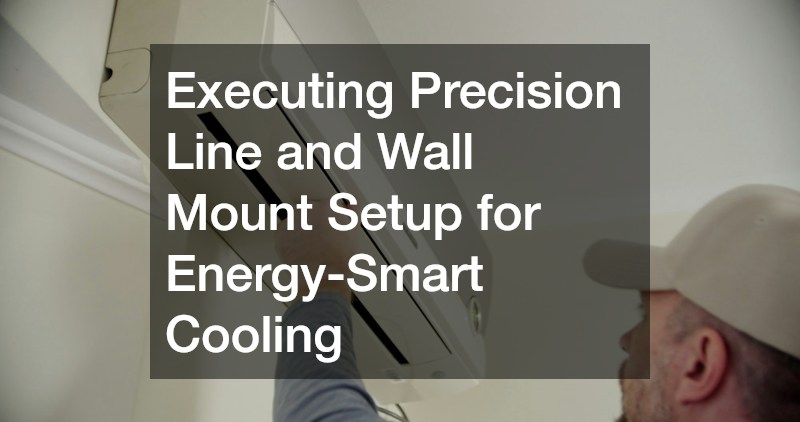
Executing Precision Line and Wall Mount Setup for Energy-Smart Cooling
While ductless technology offers remarkable operational efficiency and whisper-quiet operation, the physical longevity and thermal performance of the equipment depend entirely on the precision of the initial mechanical installation. Improper line flares, inadequate line vacuuming, or poorly pitched condensate drain hoses can cause recurring refrigerant leaks, indoor water damage, and premature electronic control board failures.
Executing a flawless mini split installation requires master-level mechanical craftsmanship and specialized refrigeration tooling. Certified installation technicians core small, three-inch penetrations through exterior building envelopes, sealing structural framing with expanding waterproof sleeves to prevent moisture intrusion. They use eccentric flaring tools to create micro-smooth copper flares, torque all brass flare nuts to exact manufacturer inch-pound specifications, and pull deep nitrogen-assisted vacuums down below five hundred microns to eliminate every trace of atmospheric moisture and non-condensable gases from the line.
Troubleshooting Igniters, Heat Exchangers, and Burners Before Winter Freezes
Winter home comfort requires more than just warm air; it demands absolute combustion safety and mechanical dependability. A residential gas or oil furnace relies on precise fuel-to-air mixtures, high-voltage electronic ignition, and sealed metal chambers to contain volatile combustion byproducts—such as lethal carbon monoxide—while transferring thermal energy to the indoor airstream.
Addressing structural burner wear through targeted heating repairs during autumn prevents sudden furnace lockouts and hazardous combustion leaks when severe winter weather arrives. Experienced heating mechanics test hot surface igniters for correct electrical resistance, clean microscopic oxidation from flame sensor rods to prevent nuisance burner shutdowns, and inspect gas manifold pressures using digital manometers. They also utilize advanced digital flue gas analyzers and specialized infrared cameras to inspect the internal curves of the heat exchanger, checking for hairline stress fractures that could permit carbon monoxide to seep into circulating household air.
Balancing Radiant and Forced-Air Warmth Across High-Ceiling Living Spaces
Contemporary architectural trends favor dramatic open-concept floor plans, vaulted ceilings, and expansive double-height living rooms. However, because warm air naturally rises toward the ceiling while cool air pools along the floor, these expansive vertical spaces often suffer from severe temperature stratification, leaving seating areas feeling chilly and drafty while valuable heat gathers uselessly near the roofline.
Achieving balanced interior warmth requires a cohesive strategy that optimizes forced-air delivery, programmable ceiling destratification fans, and supplementary heating elements throughout high-ceiling spaces. Certified mechanical designers balance supply airflow velocities, adjusting floor register dampers and supply grille louvers to drive warm air downward toward the primary living plane before it can rise. In multi-story Great Rooms, pairing primary forced-air systems with supplementary hydronic radiant floor tubing embedded beneath tile or hardwood floors creates a uniform thermal layer right where family members walk and sit.
Unifying Modern Thermostats and Dual-Zone Climate Units for Effortless Comfort
Even the most advanced heating and cooling equipment cannot perform efficiently if it receives commands from outdated, poorly placed, or improperly wired wall thermostats. Legacy bimetallic or basic digital thermostats measure temperature only at a single, often unrepresentative hallway location, ignoring the solar heat entering south-facing bedrooms or the drafts cooling north-facing home offices.
Modernizing your household controls with a synchronized heating and air automation ecosystem links multi-stage variable-capacity machinery with smart, communicating thermostats and wireless room sensors. Smart controllers calculate indoor humidity levels alongside dry-bulb temperatures, utilizing complex thermal algorithms to modulate compressor speed, blower airflow, and auxiliary heat stages with exceptional precision. Homeowners can program energy-saving setback schedules, monitor daily energy consumption metrics, and adjust temperatures remotely from a smartphone or tablet.
Creating an extraordinary, energy-efficient, and dependable indoor climate requires coordinating seasonal system evaluations, precision diagnostic repairs, scheduled preventative servicing, ductless zoning technology, combustion safety, and intelligent digital controls into a single, cohesive home management plan. Prioritizing mechanical airflow balance, refrigerant circuit integrity, and ductwork sealing before addressing cosmetic home renovations ensures that your property rests on a reliable, code-compliant foundation of thermal comfort. Combining high-efficiency variable-capacity heat pumps with targeted mini-split zoning, balanced indoor humidity control, and smart thermostat scheduling creates a high-performance living environment that shields your building envelope from moisture issues while elevating daily comfort.